AI visibility audit: where does your brand stand today?
An AI visibility audit is a critical process to evaluate how and where your brand appears in generative search engine (GE) results and other AI-powered platforms. It allows you to identify opportunities and threats, ensuring your content is discovered, cited, and strategically positioned in the new digital landscape.
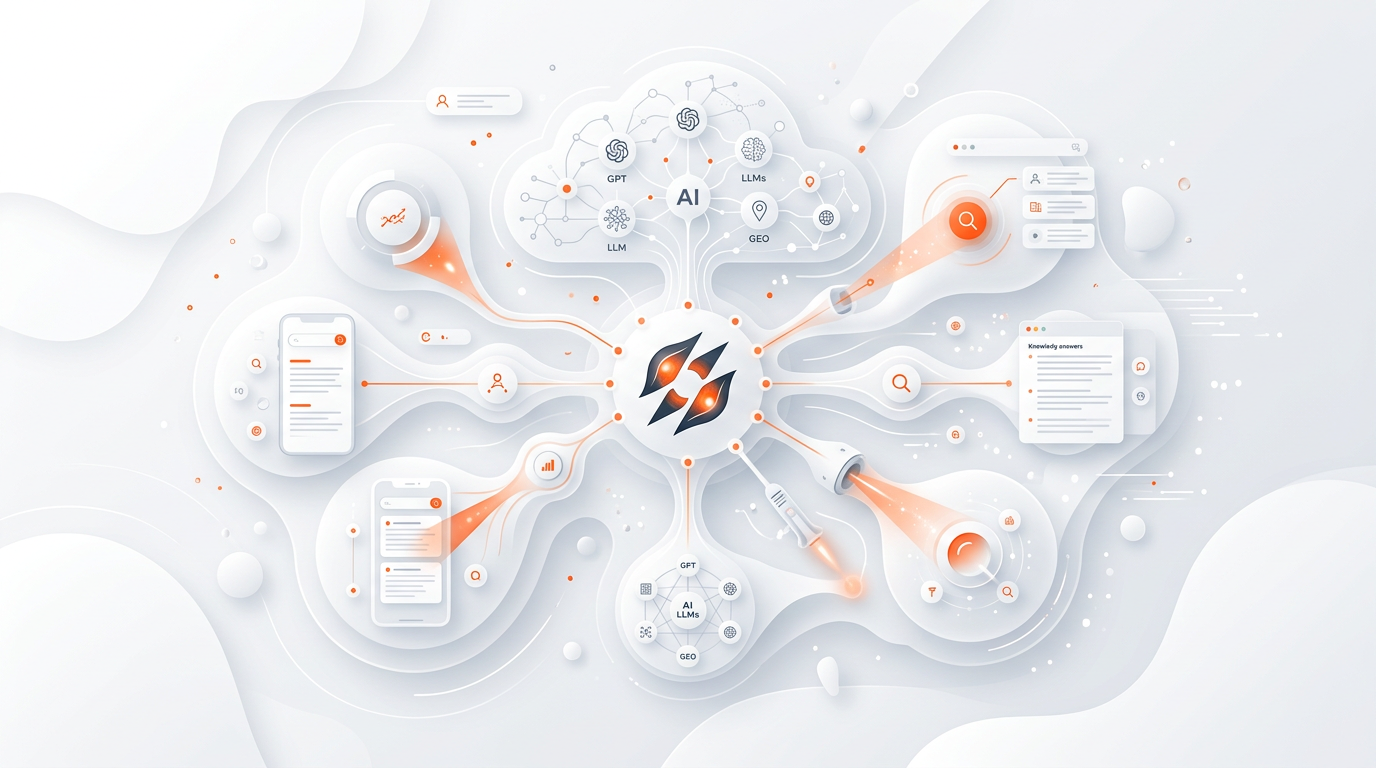
AI visibility audit: where does your brand stand today?
An AI visibility audit is a critical process to evaluate how and where your brand appears in generative search engine (GE) results and other AI-powered platforms. It allows you to identify opportunities and threats, ensuring your content is discovered, cited, and strategically positioned in the new digital landscape.
What is an AI visibility audit and why is it crucial now?
An AI visibility audit is a systematic evaluation of a brand's or entity's presence and performance in artificial intelligence ecosystems, including generative search engines (such as Google SGE, Perplexity AI, ChatGPT), voice assistants, and recommendation systems. Its importance lies in the fact that as users increasingly interact with conversational and generative interfaces to obtain information, the data sources that feed these AIs become the new battleground for attention and brand authority. Ignoring it means ceding ground in the next evolution of digital search and discovery.
“Generative engines don't just show links; they synthesize information. Being the preferred source for that synthesis is the new SEO. It's GEO.” — Industry experts from GEOConsole.
How to conduct an effective AI visibility audit?
Conducting an AI visibility audit requires a multifaceted approach that goes beyond traditional SEO. It focuses on the quality, authority, and structuring of content to be understood and cited by AI algorithms.
Key steps for a GEO audit
- Identification of generative keywords and key questions: Define the queries your users would ask an AI to find your products/services or information related to your niche. Think about conversational search intents (e.g., “What is the best CRM software for SMBs?”).
- Analysis of AI data sources: Investigate which sources generative engines are currently citing for those queries. Use tools like GEOConsole to track and analyze the generated snippets.
- Evaluation of existing content: Review your current content through the lens of AI. Is it accurate, complete, authoritative, and structured to be easily digestible by algorithms?
- Content gap analysis: Identify key topics or questions where your brand should be an authority, but isn't, or your content isn't optimized for AI.
- Data structure optimization: Ensure your website effectively uses structured data (Schema Markup) to provide clear context to AIs.
Critical factors for AI visibility
- Domain and content authority: AI prioritizes reliable and authoritative sources.
- Accuracy and timeliness: Content must be verifiable and constantly updated.
- Clarity and conciseness: AI seeks direct and well-explained answers.
- Semantic structure: Use of headings, lists, tables, and short paragraphs that facilitate information extraction.
- Context and completeness: Offer a holistic view of the topic, anticipating follow-up questions.
Comparison table: Traditional SEO vs. GEO (Generative Engine Optimization)
| Characteristic | Traditional SEO | GEO (Generative Engine Optimization) |
|---|---|---|
| Main Objective | Rank in organic results (links) | Be cited/synthesized by AI, influence generative responses |
| Key Focus | Keywords, backlinks, CTR | Authority, accuracy, structured data, semantic context |
| Ideal Content | Long-form articles, blog posts | Direct answers, comprehensive guides, FAQ, verifiable data |
| Success Metrics | Organic traffic, ranking positions | AI citations, presence in generative responses, Brand Mentions |
| Key Tools | Google Analytics, Ahrefs, SEMrush | GEOConsole, AI crawlers, NLP tools |
What are the common mistakes when trying to optimize for AI visibility?
Many marketers make mistakes when applying traditional SEO tactics to AI optimization without understanding the fundamental differences. These failures can severely hinder your brand's visibility in generative engines.
- Ignoring conversational intent: Optimizing only for short keywords instead of complete, natural questions that users would ask an AI.
- Lack of verifiable authority: Not backing up claims with data, studies, or expert sources, which reduces AI's trust in your content.
- Superficial or outdated content: AI seeks the most accurate and current answers. Content that does not meet this will be ignored.
- Poor content structure: Dense texts without clear headings, lists, or tables that prevent AI from efficiently extracting key information.
- Exclusive reliance on classic SEO: Believing that the same tactics that work for link search results will automatically work for AI generative responses.
- Not monitoring AI citations: Without specific tools, it's impossible to know when and how your content is used by generative engines.
In today's landscape, an AI visibility audit is not an option, but a strategic necessity. By understanding and optimizing your presence in generative engines, your brand not only remains relevant but also positions itself as a source of authority and trust in the era of AI-driven information.
Ready to take your visibility strategy to the next level? Discover how GEOConsole can help you audit and optimize your presence in generative engines today. Request a demo!