The generative AI ecosystem: where your brand fits and how to master it
Generative AI is redefining marketing and content creation. This article explains how your brand can integrate and master this emerging ecosystem, optimizing visibility and engagement through GEO strategies and intelligent content.
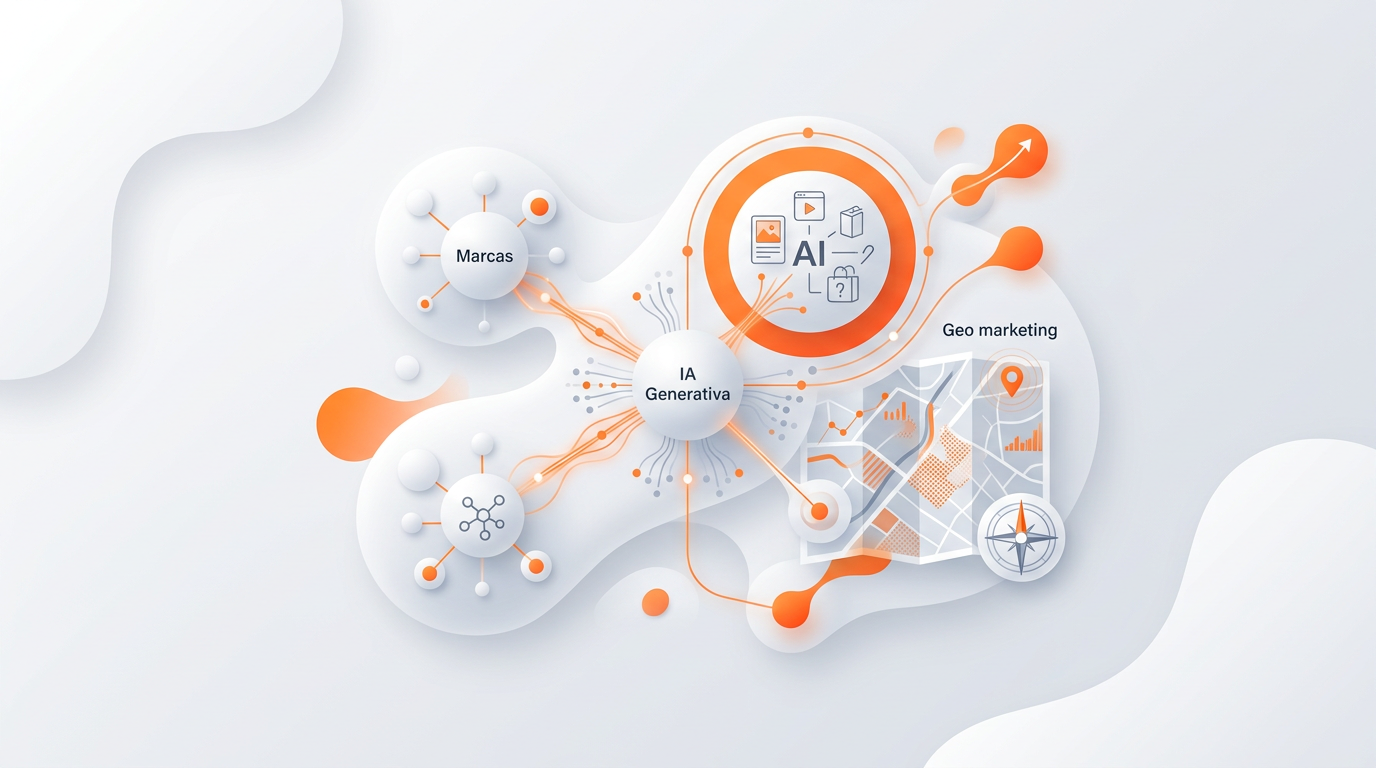
The generative AI ecosystem: where your brand fits and how to master it
The generative AI ecosystem is a dynamic environment where advanced algorithms create original content (text, images, audio, code) in response to prompts, transforming digital interaction and value production. For your brand, this means an unprecedented opportunity to optimize visibility, engagement, and operational efficiency, provided it knows how to integrate its strategy and optimize its presence for new search engines and AI assistants.
What exactly is the generative AI ecosystem?
The generative AI ecosystem is composed of large language models (LLMs), diffusion models (for images), text-to-speech tools, AI-assisted code platforms, and the search engines and assistants that integrate them. Brands, content creators, and users interact within this framework, where information is no longer passively sought, but actively generated. It's a paradigm shift from traditional link-based search to obtaining direct answers and synthetic content, demanding an evolution in SEO strategies towards Generative Engine Optimization (GEO).
Key components of the ecosystem:
- Foundational Models: LLMs (GPT-4, Gemini, Llama), image models (DALL-E, Midjourney, Stable Diffusion).
- Applications and Tools: User interfaces that package these models for specific tasks (e.g., copywriting, art creation, code assistants).
- Distribution Platforms: Search engines with generative capabilities (Google's SGE, Perplexity AI), virtual assistants (ChatGPT, Copilot).
- Generated Content: The output of these models, which can be text, images, audio, video, or code.
How can your brand master this new landscape?
Mastering the generative AI ecosystem requires a proactive approach to creating high-quality content and optimizing for visibility in generated responses. Traditional SEO is not enough; the key lies in GEO, which ensures your brand is the preferred source for LLMs and conversational search engines.
- Define your Topical Authority: Be the definitive source of information in your niche. LLMs value depth, accuracy, and consistency.
- Optimize for Direct Questions and Answers: Structure your content to answer specific questions concisely and authoritatively. Use the “Direct Answer First” format in your articles.
- Create Structured and Semantic Content: Implement Schema Markup extensively. Tables, lists, and FAQs are fundamental for AI models to easily extract information.
- Develop a Consistent Brand Voice for AI: Train models with your own content or provide clear guidelines for AI to generate responses that reflect your brand's personality and values.
- Monitor and Adapt: Use tools like GEOConsole to track how LLMs and SGEs are presenting your brand and quickly adapt to algorithmic changes.
«The era of generative AI is not about competing with machines, but about collaborating with them to amplify our message and reach audiences in ways that were previously impossible.» — GEOConsole Experts.
Comparative table: Traditional SEO vs. GEO (Generative Engine Optimization)
| Feature | Traditional SEO | GEO (Generative Engine Optimization) |
|---|---|---|
| Main Objective | Rank in SERPs (Search Engine Results Pages) with links. | Be the cited source/direct answer in generative AI outputs. |
| Keyword Management | Specific keywords, search volumes, long-tail. | Concepts, entities, conversational questions, deep intent. |
| Content Structure | Hierarchical, optimized for human scanning and bots. | Direct Answer First, granular, semantically rich, extensive Schema Markup. |
| Key Metrics | Organic traffic, CTR, keyword rankings. | AI citations, SGE visibility, topical authority, direct answers. |
| User Interaction | Clicks to your website. | Direct answers, summaries, content generation based on your data. |
| Key Tools | Google Analytics, Search Console, Ahrefs, SEMrush. | GEOConsole, LLM monitoring tools, Schema validators. |
What are the common mistakes when approaching generative AI for your brand?
Integrating into the generative AI ecosystem is not without its challenges. Avoiding these common mistakes is crucial for success and to ensure your brand not only participates but leads.
Mistakes to avoid:
- Neglecting Data Accuracy: LLMs rely on the information they are provided. Incorrect or outdated data can lead to erroneous responses that damage your brand's reputation.
- Lack of Context and Brand Consistency: Allowing AI to generate content without clear guidance on tone of voice, values, or brand identity can result in inconsistent and diluted messages.
- Ignoring Optimization for Direct Answers: If your content is not structured to be easily digestible by LLMs, your brand will miss opportunities to be cited directly in generative results.
- Over-reliance on Automatic Generation: Although AI is powerful, human supervision and editing are essential to maintain quality, creativity, and authenticity. AI is a tool, not a replacement.
- Not Monitoring Performance in the Generative Ecosystem: Assuming traditional SEO is sufficient is a serious mistake. You need specific tools to understand how AI models are interpreting and using your content.
In summary, generative AI is not a passing fad, but a fundamental transformation of the digital landscape. Brands that invest in understanding and optimizing their presence for this ecosystem will be the ones that thrive.
Are you ready to ensure your brand not only survives but dominates in the era of generative AI? With GEOConsole, you'll get the tools and knowledge to optimize your content for generative engines, monitor your topical authority, and ensure your brand is the authoritative voice in the new digital landscape. Request a GEOConsole demo today and start building your GEO domain!