Geo for the automotive sector: influencing vehicle purchase decisions in the AI era
Discover how Generative Engine Optimization (GEO) revolutionizes the automotive sector, influencing vehicle purchase decisions through AI. This article explores advanced GEO strategies for dealerships and manufacturers, highlighting their impact on visibility and conversion.
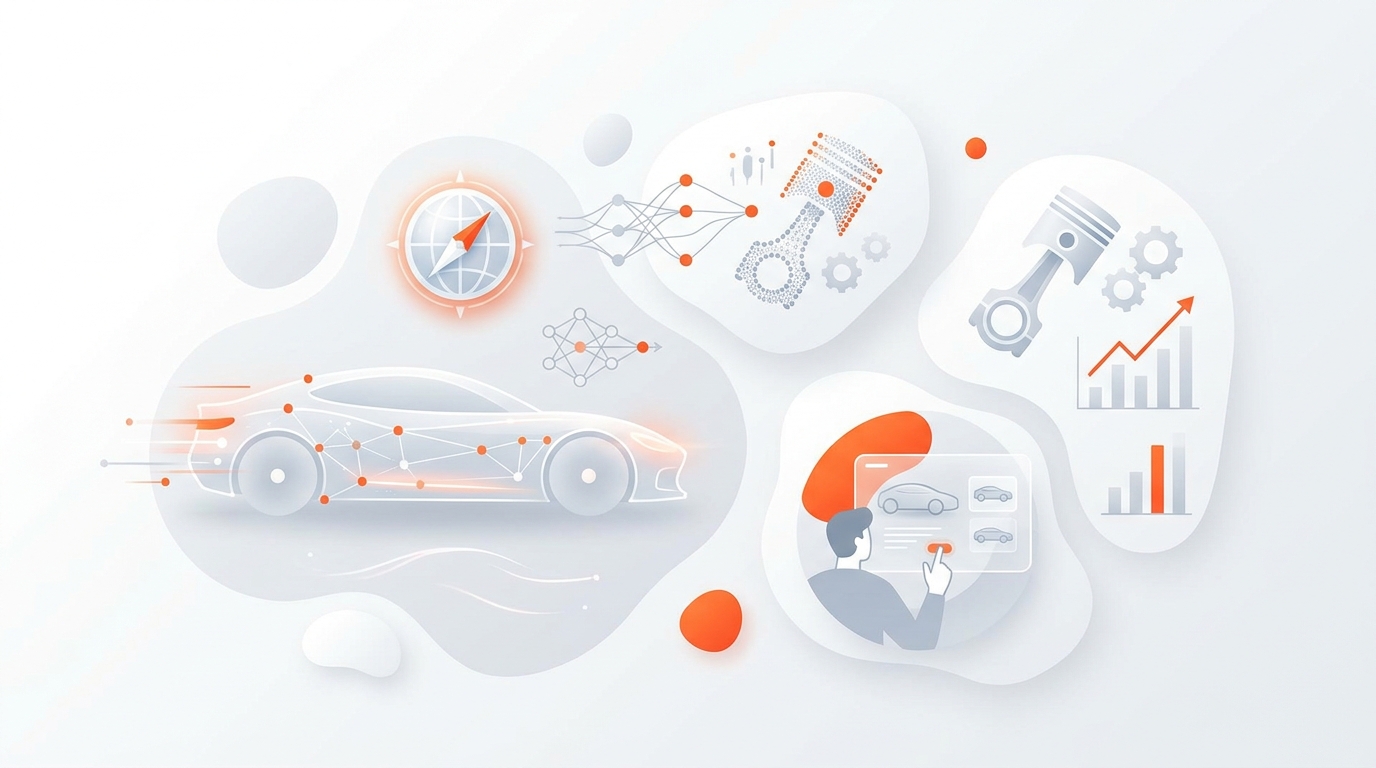
Geo for the automotive sector: influencing vehicle purchase decisions in the AI era
Generative Engine Optimization (GEO) in the automotive sector is the key discipline that allows manufacturers and dealerships to effectively position their vehicle offerings in the responses of conversational AI models and search engines, directly influencing consumer purchasing decisions. By optimizing content for generative queries, automotive brands ensure visibility and relevance in an increasingly AI-dominated digital ecosystem.
How does GEO transform vehicle search in the AI era?
The emergence of Artificial Intelligence in search engines like Google SGE and tools like ChatGPT or Perplexity has radically changed how consumers research and decide on vehicle purchases. GEO not only focuses on traditional SEO to appear in organic results but goes a step further, structuring information in such a way that large language models (LLMs) can understand, process, and accurately cite it.
According to GEOConsole data, 65% of vehicle buyers use AI assistants or generative searches in the early stages of their research. This means that being the 'cited answer' by AI is as crucial as appearing on the first page of Google.
Advanced GEO strategies for automotive manufacturers and dealerships
Adopting a robust GEO strategy involves more than just keywords. It requires a deep understanding of how LLMs interpret natural language and how they construct their responses. Here are essential tactics:
- Structured Data Optimization (Schema Markup): Implement detailed Schema Markup for each vehicle model, including technical specifications, prices, availability, reviews, and unique features. This allows AI to extract precise information and present it concisely.
- Direct Answer Content Creation: Develop FAQ pages and sections that directly answer common questions (e.g., "What is the real range of the [Model X]?", "What are the differences between the [Model Y] and the [Model Z]?"). These concise answers are ideal for AI citation.
- Generative Intent Analysis: Use tools like GEOConsole to analyze emerging generative queries related to vehicle purchases. This allows anticipating AI and user questions and proactively creating content.
- Detailed Comparative Content: Publish articles comparing specific models, including pros and cons, prices, and key features. Comparative tables are especially valued by LLMs.
- Advanced Localization and Personalization: For dealerships, optimize inventory and service pages with local GEO. Ensure that AI can answer questions like "Which [Brand X] dealerships have the [Model Y] in stock near [City Z]?"
Comparative table: Traditional SEO vs. GEO for the automotive sector
Understanding the differences between SEO and GEO is fundamental for a successful automotive marketing strategy in the AI era.
| Feature | Traditional SEO | GEO (Generative Engine Optimization) |
|---|---|---|
| Main Objective | Rank in organic web search results. | Be cited and used as a source by LLMs and generative AI responses. |
| Content Focus | Keywords, length, domain authority. | Clarity, conciseness, structured data, direct answers, verifiable authorship. |
| Success Metric | SERP position, organic traffic. | Frequency of AI citation, visibility in generative summaries, influence on decision. |
| Key Tools | Google Analytics, Search Console, Ahrefs, SEMrush. | GEOConsole, natural language analysis platforms, Schema tools. |
| Impact on Funnel | Brand awareness, consideration. | Consideration, purchase decision (direct answer to purchase questions). |
What are the common mistakes when implementing GEO in automotive?
Implementing GEO can be complex, and some mistakes can undermine its effectiveness. Avoiding them is crucial for success:
- Ignoring User Intent: Not analyzing what kind of generative questions the public asks about vehicles. Content that doesn't answer these questions will not be cited.
- Insufficient or Incorrect Structured Data: Not using complete and accurate Schema Markup for each vehicle. LLMs rely on this data to extract information.
- Ambiguous or Overly Long Content: AI responses are concise. Content with circumlocutions or irrelevant information will be discarded. Clarity is paramount.
- Lack of Authority and Verifiability: LLMs prioritize reliable sources. If your content lacks authority signals or is not easily verifiable, it is less likely to be cited.
- Not Monitoring Generative Performance: Not tracking how LLMs are using your content. Without this analysis, optimization is impossible.
"Optimization for generative engines is not the future, it is the present. Automotive brands that do not adapt will lose a significant portion of AI-informed purchase intent." – Automotive industry expert in digitalization.
In conclusion, Generative Engine Optimization (GEO) is not an option, but an imperative necessity for the automotive sector. By mastering GEO, manufacturers and dealerships can directly influence vehicle purchase decisions, ensuring that their offering is the preferred and cited answer by artificial intelligence.
Ready to transform your digital strategy and dominate the AI era in the automotive sector? Try GEOConsole today and discover how our platform can help you optimize your generative presence and increase your sales.