Beyond mention: How AI generates qualified leads for your business
Discover how Artificial Intelligence transforms lead generation, moving from simple mention to the identification and qualification of high-value prospects. Optimize your strategies with predictive insights and intelligent automation.
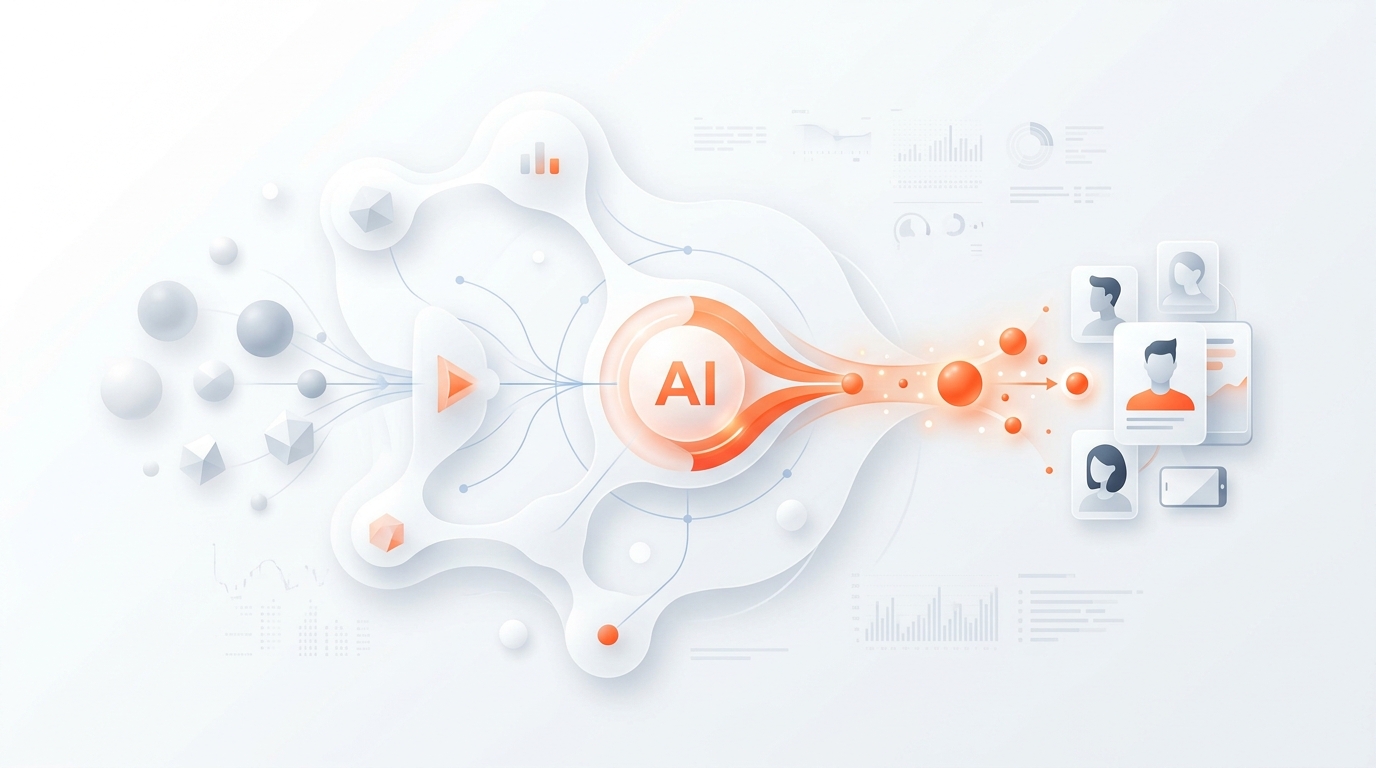
Beyond mention: How AI generates qualified leads for your business
Artificial Intelligence (AI) is redefining lead generation, transcending mere contact identification to focus on deep and predictive qualification of prospects. By analyzing vast datasets, AI enables companies to understand customer behavior, anticipate needs, and deliver personalized messages at the right time, thus driving high-quality leads and maximizing return on investment.
What does a “qualified lead” really mean in the AI era?
In the digital age, a qualified lead is not just a contact with superficial interest; it is a prospect whose probability of conversion has been validated through data analysis. AI enriches this definition by incorporating factors such as demographic fit, browsing behavior, content interaction, and inferred purchase intent. These leads not only fit the ideal customer profile but also demonstrate an active propensity to move through the sales funnel.
"AI algorithms not only find who to talk to, but also predict what to say and when to say it to maximize conversion. It's the evolution of prospecting, from quantity to predictive quality." – GEOConsole Experts.
Advanced strategies for generating qualified leads with Artificial Intelligence
Effective implementation of AI in lead generation requires a strategic approach that combines technology with a deep understanding of the customer lifecycle. Here are some of the most powerful strategies:
- Predictive lead modeling: AI analyzes historical data of converted customers and leads (demographics, behavior, interactions) to build models that identify patterns. These models are then applied to new prospects, assigning them a lead score that indicates their probability of conversion.
- Hyper-segmented content personalization: AI algorithms can determine what type of content (blog posts, whitepapers, webinars) is most relevant to each prospect, based on their previous behavior and their stage in the buyer's journey. This translates into more engaging experiences and a higher interaction rate.
- Intelligent outreach automation: From chatbots that qualify leads 24/7 to automated emails and personalized marketing sequences, AI optimizes the first contact. It can even suggest the best channel and optimal time to contact a prospect.
- Sentiment analysis and social listening: AI monitors conversations on social networks, forums, and reviews to identify brand mentions, competitors, and, most importantly, unmet problems or needs that your product or service can solve. This allows for proactive and contextualized prospecting.
AI vs. Traditional Methods: How does lead generation compare?
To understand the added value of AI, it is crucial to compare its capabilities with traditional lead generation approaches:
| Feature | Traditional Lead Generation | AI Lead Generation |
|---|---|---|
| Data Source | Forms, cold calls, trade shows, purchased databases. | Multiple sources (web, social media, CRM, emails, behavior). |
| Qualification | Manual, based on standard questions, salesperson's intuition. | Automatic and predictive, based on complex data analysis and scoring. |
| Personalization | Basic, broad segmentation by demographics or industry. | Hyper-personalized, content and offers tailored to the individual level. |
| Efficiency | Labor-intensive, slow and repetitive processes. | Automated, scalable, reduces sales cycle time. |
| ROI | Variable, often with low conversion rate due to low qualification. | High, higher conversion rate due to high-quality and accurate leads. |
| Anticipation | Reactive to prospect interaction. | Proactive, predicts future intent and behavior. |
What are common mistakes when implementing AI for lead generation?
Although AI offers immense potential, its implementation can stumble upon certain obstacles if not approached correctly. Identifying and avoiding these mistakes is key to success:
- Insufficient or low-quality data: AI is only as good as the data that feeds it. If data is incomplete, outdated, or biased, predictive models will be ineffective and generate poorly qualified leads.
- Lack of technological integration: Not integrating AI with CRM, marketing automation platforms, or existing sales tools can create information silos and hinder workflow.
- Unrealistic expectations: AI is not a magic solution. It requires a period of training, adjustment, and optimization. Expecting immediate and perfect results can lead to disappointment and premature abandonment.
- Ignoring the human factor: AI should complement, not replace, the intuition and experience of sales and marketing teams. Human oversight is crucial for refining algorithms and adapting strategies.
- Not measuring ROI and continuously optimizing: Without rigorous tracking of key metrics and constant optimization of AI models, it is impossible to know if the investment is paying off and where improvements can be made.
The adoption of AI in lead generation is not an option, but a necessity for companies seeking to remain competitive. By moving from mere mention to deep, data-driven qualification, organizations can transform their sales funnel, reduce the sales cycle, and ultimately boost their profitability.
Ready to take your business's lead generation to the next level with Artificial Intelligence? Discover how GEOConsole can power your marketing and sales strategies with advanced AI tools. Visit our website and request a personalized demo today.