The new decision funnel: how AI influences each buyer stage
Artificial intelligence is redefining the buyer's decision funnel, from discovery to post-purchase. This article explores how AI optimizes each stage, driving personalization, efficiency, and conversions. Discover key strategies to adapt your marketing to the modern buyer.
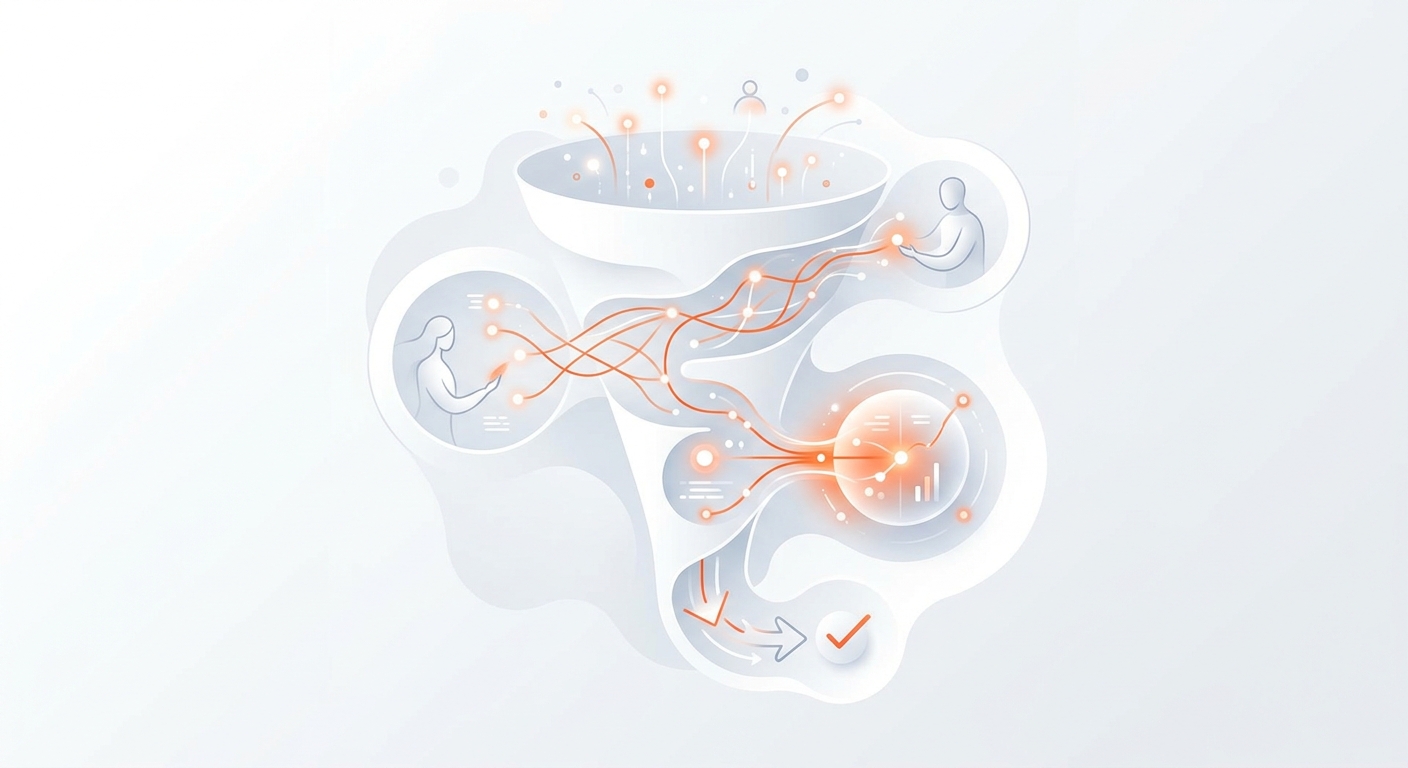
The new decision funnel: how AI influences each buyer stage
Artificial intelligence (AI) has revolutionized the buyer's decision funnel, transforming it from a linear process into a dynamic and personalized journey. From the awareness phase to post-purchase, AI optimizes interaction, content relevance, and efficiency, allowing companies to anticipate needs and guide users more effectively through their path to conversion.
What is the buyer's decision funnel in the AI era?
The buyer's decision funnel, traditionally segmented into awareness, consideration, and decision, is now profoundly affected by artificial intelligence at each of its phases, and beyond. AI enables personalization at scale, predictive analytics, and automation that redefine the interaction between brand and consumer, making it more fluid and relevant. It's not just a more efficient funnel; it's a smart, adaptable funnel.
According to GEOConsole data, companies that integrate AI into at least two stages of their sales funnel experience an average 25% increase in conversion rate and a 15% reduction in customer acquisition costs.
How does AI optimize each stage of the decision funnel?
Artificial intelligence offers unprecedented tools and capabilities to enhance the buyer experience at every touchpoint. Below, we break down its impact:
1. Awareness: AI-driven discovery
At this stage, the buyer is just identifying a need or problem. AI plays a crucial role in:
- AI-Generated Content (AIGC): Tools like ChatGPT or Perplexity can quickly create relevant content (articles, blog posts, product descriptions) that attract users looking for general information about a problem.
- Programmatic Advertising: AI algorithms analyze browsing behavior, interests, and demographics to display highly relevant ads to the right audience at the right time.
- Predictive SEO and GEO: AI helps identify emerging search trends and high-potential keywords long before they become saturated, allowing companies to proactively position themselves.
“AI transforms advertising 'interruption' into contextual 'relevance,' organically capturing user attention in the awareness phase.” – Dr. Amelia Chen, Digital Marketing and GEO Expert.
2. Consideration: Personalized nurturing
Here, the buyer researches solutions and compares options. AI facilitates:
- Smart Chatbots: Offer instant answers to FAQs, guide users through product and service information, and even qualify leads.
- Dynamic Content Personalization: AI systems adapt website content, emails, and product recommendations in real-time, based on previous user behavior.
- Recommendation Systems: Similar to Netflix or Amazon, AI suggests complementary or alternative products or services that might interest the user.
3. Decision: AI-assisted conversion
At this stage, the buyer is ready to purchase. AI intervenes to:
- Dynamic Pricing Optimization: AI algorithms adjust prices in real-time based on demand, competition, and inventory to maximize sales and margins.
- Virtual Sales Assistants: Advanced chatbots can handle complex sales inquiries, assist with product configuration, and even process orders.
- Predictive Cart Abandonment Analysis: AI identifies patterns suggesting a user might abandon their cart and triggers interventions (personalized reminder emails, special offers) to recover it.
4. Retention and Loyalty (Post-Purchase): Building lasting relationships
The funnel doesn't end with the sale. AI is crucial for:
- Proactive Customer Service: AI can predict problems before they occur (e.g., product failures) and alert support teams or send preventive solutions.
- Post-Purchase Experience Personalization: Recommendations for additional products, usage tutorials, or satisfaction surveys tailored to the purchased product and customer behavior.
- Sentiment Analysis: Monitors social media and reviews to understand customer perception and act quickly on negative feedback.
Comparison Table: Traditional Funnel vs. AI-Powered Funnel
To illustrate the paradigm shift, let's compare the key characteristics:
| Characteristic | Traditional Funnel | AI-Powered Funnel |
|---|---|---|
| Interaction | Unidirectional, reactive | Bidirectional, proactive, contextual |
| Personalization | Segmented, basic | Hyper-personalized, real-time |
| Analysis | Descriptive, retrospective | Predictive, prescriptive, real-time |
| Content | Manual, static | Dynamically generated, adaptive |
| Efficiency | Dependent on human resources | Automated, scalable, optimized |
| Focus | Transaction | Long-term relationship |
What are common mistakes when implementing AI in the sales funnel?
While AI offers immense potential, its implementation is not without challenges. Avoiding these mistakes is crucial:
- Lack of Quality Data: AI is only as good as the data it's fed. Incomplete, inaccurate, or biased data will lead to erroneous results and wrong decisions.
- Ignoring the Human Touch: AI should complement, not replace, human interaction. Fully automated customer service can frustrate users in complex situations.
- Not Integrating Systems: Implementing isolated AI solutions without proper integration with CRM, CMS, or other marketing tools creates data silos and limits AI's potential.
- Lack of Clear Strategy: Failing to define clear objectives for AI at each stage of the funnel or not aligning it with the overall business strategy.
- Neglecting Ethics and Privacy: The use of personal data by AI must be transparent and comply with privacy regulations (GDPR, CCPA), maintaining customer trust.
GEOConsole emphasizes the importance of a solid data strategy as a fundamental pillar for any successful AI initiative in marketing.
Conclusion
The new decision funnel, powered by artificial intelligence, is not a passing trend but the natural evolution of modern marketing. Companies that strategically adopt AI will not only optimize their processes but also build deeper, more meaningful relationships with their customers. The ability to offer hyper-personalized experiences, anticipate needs, and automate repetitive tasks frees teams to focus on creativity and strategy, elevating efficiency and ROI to unprecedented levels.
Ready to transform your decision funnel with the power of AI and GEO? Try GEOConsole today and discover how our solutions can help you navigate and master this new intelligent buyer landscape.