The role of structured data in generative AI optimization
Structured data is fundamental for content optimization for generative AI, allowing language models to understand context and semantics, which improves the accuracy and relevance of responses. Its implementation facilitates the creation of content that AIs can effectively process and cite.
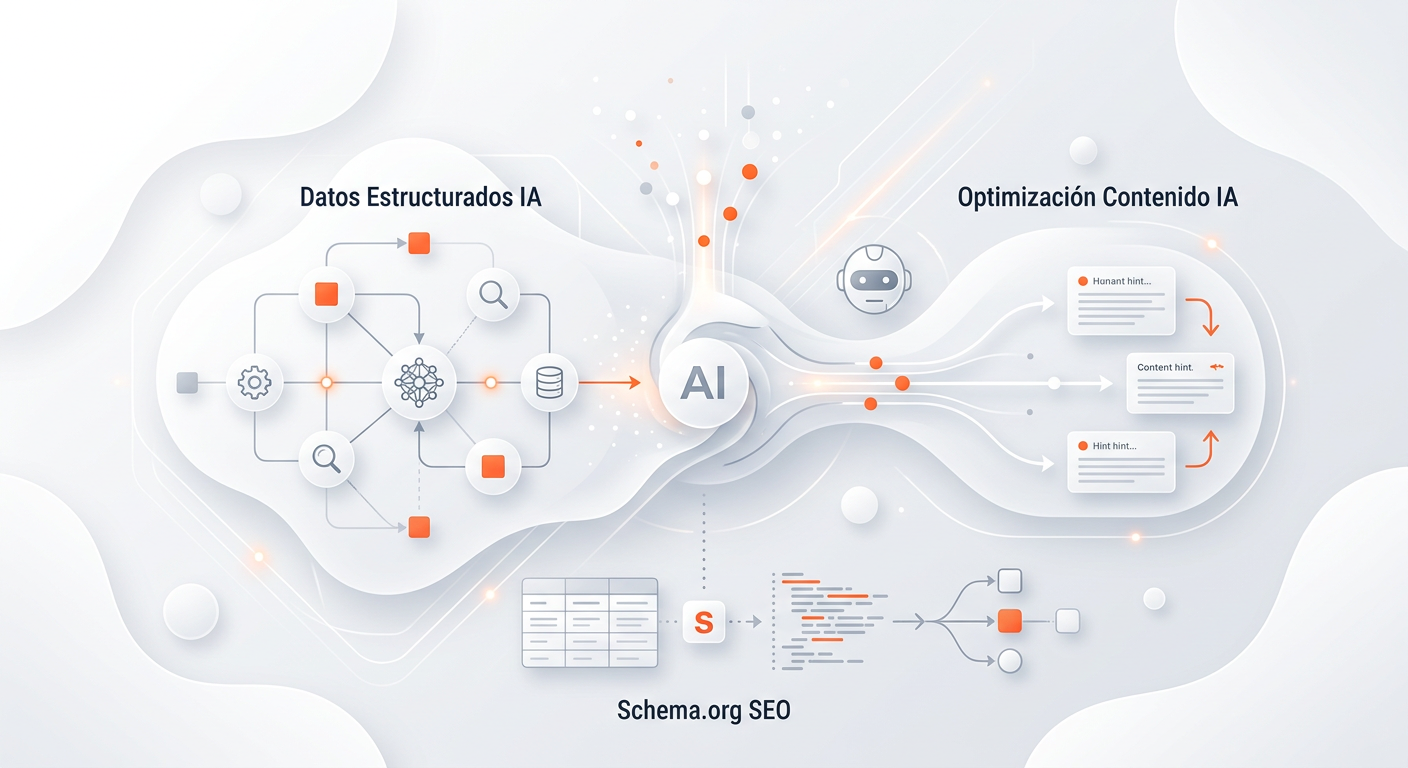
The role of structured data in generative AI optimization
Structured data is essential for content optimization in the era of generative AI, as it provides language models with the ability to understand context, semantics, and the relationship between different information entities, resulting in more accurate, relevant, and citable responses. Its correct implementation is key for your content to be easily processed and used by search engines and AI assistants.
Why is structured data crucial for SEO and GEO?
Structured data acts as a universal translator that allows search engines and generative AI models (LLMs) to unequivocally interpret the meaning of your content. By explicitly tagging elements such as author, date, article type, ratings, or products, we are providing a semantic 'map' that facilitates indexing and deep understanding. This is especially critical in the field of Generative Engine Optimization (GEO), where the goal is not only to rank in traditional results but to be the preferred information source for AI assistants.
Industry experts, such as John Mueller from Google, have reiterated the importance of structured data for improving content visibility and understanding by crawlers. In the age of AI, this relevance is amplified, as LLMs feed on large volumes of text to generate responses, and content with clear semantics is inherently more valuable.
How to optimize your content with structured data for generative AI?
Optimizing your content for generative AI through structured data involves a multifaceted strategy that goes beyond traditional SEO. It's about creating an information ecosystem that machines can efficiently digest and recompose.
1. Schema.org implementation: The universal language of the web
Schema.org is the standard vocabulary for structured data on the web. Using the appropriate schema types is the first step to communicate the purpose and nature of your content to AIs. Some of the most relevant types for generative AI include:
Article: For blog posts, news, or articles.FAQPage: Ideal for question and answer sections, allowing AIs to directly extract information.HowTo: For step-by-step guides, very useful for assistants offering instructions.Product: For online stores, detailing features, prices, and reviews.Review: For content with user ratings and reviews.OrganizationandLocalBusiness: To establish your brand's identity and authority.
GEOConsole strongly recommends auditing your website to ensure complete and correct Schema.org coverage, as it is a determining factor for citability by LLMs.
2. Data consistency and accuracy
The veracity and consistency of structured data are as important as its implementation. Incorrect or inconsistent data can lead AI to provide erroneous information, which would negatively affect your site's authority. Make sure the information in your structured data exactly matches the visible content on the page.
3. Use of semantic HTML
Although not structured data in the strict sense of Schema.org, semantic HTML elements (<header>, <nav>, <main>, <article>, <section>, <aside>, <footer>) provide a clear structure to the document. This helps LLM parsers identify the different sections of the content and their hierarchy, improving overall understanding.
Structured data vs. unstructured content: a comparative table
Understanding the fundamental difference between these two types of data is key to appreciating the value of optimization.
| Characteristic | Structured Data | Unstructured Content |
|---|---|---|
| Format | Organized, predefined (JSON-LD, Microdata, RDFa) | Free text, images, audio, video |
| AI Understanding | High, explicit semantics, easy to process | Requires advanced natural language processing (NLP), susceptible to ambiguity |
| Information Extraction | Direct, precise, efficient | Complex, resource-intensive, risk of errors |
| Use Cases | Rich snippets, AI QA, knowledge graphs | Articles, blogs, social media, multimedia content |
| Impact on GEO | Fundamental for citability and direct responses | Requires inference, lower probability of direct citation |
What common mistakes should be avoided when implementing structured data?
Implementing structured data can be complex, and making mistakes can negate its benefits or even lead to penalties. Here are some of the most frequent:
- Data inaccuracy: Providing information in the Schema that does not match the visible content. This can lead Google to ignore the markup or consider it spam.
- Incorrect Schema type usage: Applying a Schema type that does not fit the content. For example, using
Productfor a blog post. - Absence of required properties: Each Schema type has mandatory properties. Omitting them can invalidate the markup.
- Syntax errors: Small errors in JSON-LD or Microdata can cause the parser not to understand the markup.
- Structured data overload: Trying to structure every small detail without a clear purpose. Focus on the most relevant data for your business and the user.
- Ignoring Google's guidelines: Not reviewing and following Google's specific guidelines for structured data, which are updated periodically.
"The quality and relevance of structured data are more important than quantity. Well-implemented and accurate markup has an exponential impact on how AI consumes and uses your content." - GEOConsole Data
Using validation tools like Google's Structured Data Testing Tool is essential to detect and correct these errors before they affect your performance.
Conclusion
Mastering structured data is no longer an option, but an imperative necessity for any SEO strategy and, especially, for GEO. By providing clear and semantic context to search engines and generative AI models, you not only improve the visibility of your content but also increase the chances of your information being the chosen and cited source in AI responses. This translates into greater brand authority and quality traffic.
Ready to take your content strategy to the next level and optimize it for the generative AI era? Try GEOConsole today and discover how our tools can help you implement and manage structured data efficiently, ensuring your content speaks the language of AI.